Finessa Official Website › Guides
Reference Guides From This Desk
Two guides sit behind the product pages here. The first reads a proprietary blend panel: what a blend total tells you, what it cannot, and how ingredient order narrows the range. The second sets a scoop of powder against a capsule, from dose precision to what a live-culture count measured at manufacture is worth. Both end on the product this desk sells.
Two reference guides from this desk
Two subjects, both raised by the label on the product this desk sells, and both useful long after you have decided about it.
How to read a proprietary blend panel
What a blend total is, what it cannot tell you, how the order of the names narrows the range, and what a label prints when it has a split to print.
Choosing a digestion supplement: powder or capsule
Why a scoop is not a capsule, what a live-culture count measured at manufacture is worth, and eight checks for any powder label, ending with this desk scoring its own tub.
What a blend total can and cannot tell a buyer
A proprietary blend is a heading, a single weight and a list of names underneath. The labelling rule allows it, so the figures are lawful, and it is a common shape in this category: three of the four groups on the tub this desk sells are built that way.
The total is a real number and it earns its place. Added across the groups, it tells you how much of a serving is dietary ingredient rather than flavouring, and it sets a hard upper bound on every name inside. What it withholds is the split — and the split is what decides whether any one of those names is present in the sort of amount a trial used.
The first guide works that through: the ceiling, the floor, what the order of the names buys you, and the five things a label prints when it has the split to print. Read it here.
What changes when the dose is a scoop
A capsule is filled by a machine, sealed and counted. A scoop is filled by the person holding it, from a powder that settles in transit and packs differently on the day the tub is new — a difference that reaches further than most buyers expect.
A powder is tasted, so it carries sweetener, flavour and an acid inside the same serving the actives are in. It also holds far more than a capsule, which is why grams appear on a scoop label where milligrams appear on a capsule one. And a live-culture count on a powder is almost always quoted at the time of manufacture, which is a different question from what is alive when you open it.
The second guide takes those in turn and ends with a checklist and a score. Read it here.
A short glossary for a supplement label
| On the label | What it means | What it does not mean |
|---|---|---|
| Proprietary blend | A group of dietary ingredients printed under one heading with a single total weight. | A secret formula. Every name inside it still has to be printed, heaviest first. |
| Blend total | The combined weight of everything inside that heading. | A dose. It is the ceiling for any one name in the group. |
| Daily Value not established | No reference intake has been set for that ingredient. | That the ingredient is unstudied, or that any amount of it is fine. |
| Percentage of the Daily Value | How a declared amount compares with a set reference intake, as selenium does on this panel at 2%. | A measure of strength. A reference intake is an adequacy figure. |
| CFU | Colony-forming units: the count of live organisms a culture is sold by. | A measure of benefit. It says nothing about which strain does what. |
| At the time of manufacture | The count was taken when the powder was blended and filled. | The count on the day you open the tub. |
| Prebiotic | A fibre that feeds bacteria already living in the gut. | A live organism. Nothing in a prebiotic is alive. |
| Probiotic | Live organisms, named by genus, species and usually a strain code. | Interchangeable between strains. A strain code is part of the name. |
| Standardised extract | An extract made to a stated percentage of one marker compound, such as artichoke at 5% cynarin. | A guarantee of effect. It is a manufacturing specification. |
| A 10:1 extract | Ten parts of starting material concentrated into one part of extract. | Ten times the effect of the plant. |
| Other ingredients | Everything present that is not a dietary ingredient: flavours, acids, sweeteners, flow agents. | Filler with no weight. In a powder it can be most of the scoop. |
Eleven terms, and every one of them appears on the tub this desk sells.
Five things worth checking on any label in this category
- The form and the serving. A scoop, a capsule, a gummy and a dropper are not comparable by weight, and a serving of two capsules is not the same purchase as a serving of one.
- Whether an amount is printed per name. Where a blend heading carries the only weight, every comparison you can make is a ceiling.
- What the claims actually say. A supplement may make structure and function claims and no disease claims, and the agency’s own example of a permitted one is that fibre maintains bowel regularity.
- How the live cultures are described. NCCIH reports a review of 53 studies that could not identify which species or strains are most likely to help, so a count on its own settles very little.
- The window, and who pays return postage. A long window costs nothing to print — the postage clause is where its real shape shows.
Who these guides are written for
Somebody holding a tub in one hand and a phone in the other, trying to work out whether the panel on the back supports the sentence on the front. That reader needs two things: the vocabulary, and the arithmetic that is honestly available.
They are also written for somebody comparing two products in the same aisle. Most of what separates a good label from a poor one there is not the ingredient list, which tends to converge, but how much of the formula the label is willing to show — and that is checkable in a minute once you know where to look.
Neither guide needs you to have bought anything. Both end on the product this desk sells, because a checklist nobody applies to their own shelf is not worth writing.
Five longer reads on this desk’s blog
A scoop is not a capsule
What a powder dose means in practice, from filling the scoop to what else rides along in the serving.
Reading a proprietary blend panel
The arithmetic, worked on a panel with four blend headings and nineteen plant names.
Cascara sagrada in a daily powder
A stimulant laxative inside a blend sold as prebiotic support, and what the 2002 rule actually covers.
What a CFU count leaves out
Why the basis of the count matters more than its size, and why two figures can appear on one product.
The first eight weeks
What the buyers on this desk’s record actually reported, and when they wrote.
Where the facts in these guides come from
Three places and nowhere else: the printed label and its Supplement Facts panel, the seller’s own pages with the date they were read, and public sources that were opened and checked for the sentence attributed to them.
Sources are preferred in one order. Systematic reviews and meta-analyses first, then randomised controlled trials, then government and institutional fact sheets such as MedlinePlus on dietary fibre or the NIH selenium fact sheet, then mechanism reviews. Where an ingredient has no modern trial record, that is what the page says.
Every citation carries the amount the study actually used — the dose is the part of a trial that decides whether it applies to the tub in front of you.
Who writes these guides?
This desk publishes what the tub says and marks where the seller says more than the tub does. The four claims below are the ones a sceptical reader can audit in ten minutes, which is the only reason to make them:
- The tub is the source. The claim lines, the net weight, the serving and every blend total come from the printed label and the Supplement Facts panel. Prices come from the seller’s order page, read on 18 September 2026, not from a review column.
- Blend totals, never invented amounts. The panel gives one figure for each of four blends and no figure for any single botanical, so this website prints the blend totals and stops there, including in the structured data a search engine reads.
- Sources are real and linked in the sentence. Every study cited here was confirmed against its own record before it was written down, and every government page was opened and checked by its title rather than assumed.
- Corrections change the date. Write to [email protected] and the review date at the foot of the page moves forward.
We earn when you buy. Getfinessa is the USA Authorized Finessa Retailer named at the top of this page, and this website makes money on orders placed through it. That is exactly why the blend-total notes, the three-star reviews and the cascara sagrada section are here: they are where our interest and yours pull apart, and you should be able to watch us choose.
Order support on +1 (302) 200-3480 handles tracking, changes, cancellations and refunds. It is not a sales line, and this website never presents it as a way to place an order: orders go through the checkout only.
Sources behind these guides
- U.S. Code of Federal Regulations, 21 CFR 101.36. Nutrition labeling of dietary supplements. https://www.ecfr.gov/current/title-21/chapter-I/subchapter-B/part-101/subpart-C/section-101.36
- U.S. Food and Drug Administration. Structure/Function Claims. https://www.fda.gov/food/nutrition-food-labeling-and-critical-foods/structurefunction-claims
- National Center for Complementary and Integrative Health. Probiotics: Usefulness and Safety. https://www.nccih.nih.gov/health/probiotics-usefulness-and-safety
- MedlinePlus, U.S. National Library of Medicine. Dietary Fiber. https://medlineplus.gov/dietaryfiber.html
- NIH Office of Dietary Supplements. Selenium: Fact Sheet for Consumers. https://ods.od.nih.gov/factsheets/Selenium-Consumer/
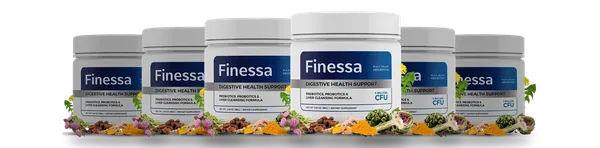
Order Finessa on the official website
One scoop a day, and 180 days to change your mind.
$39 to $59 a tub · 180 days to change your mind
Order Finessa On The Official WebsiteThree e-books with an order · 180-day money-back guarantee · lot FIN-26/GE-7289