Finessa Official Website › Choosing A Digestion Supplement
Choosing A Digestion Supplement: Powder Or Capsule
A scoop is not a capsule. A capsule is a fixed, sealed dose; a scoop is a volume of powder that can be levelled or heaped, and the tub’s own scoop is the only calibration you get. That changes how much can fit, what else rides along in the serving, and what a live-culture count is worth.
Why a scoop is not a capsule
A capsule is a decision already made. A scoop is one you make daily.
A capsule is a dose somebody else finished — weighed, filled and sealed by a machine, the only decision left being how many to swallow. Two capsules from opposite ends of a pack are the same serving.
A scoop is a volume, and volume is a proxy for weight rather than a measure of it. It holds more of a powder that has settled in transit, and noticeably more heaped than level.
None of that makes a powder worse — it makes the serving something you take part in. Level it against the rim, use the scoop that came with it, and the day-to-day variation falls away. How to take it covers the routine.
What a blend total means when you are mixing it into water
On a capsule label the milligrams are nearly all of the capsule. On a powder label they are a fraction of the scoop, because the rest of the scoop has to make the drink palatable. The tub this desk sells declares 2,259.5 mg (about 2.26 g) of blends in a scoop of about 3.2 g; the remainder is sweetener, natural flavours, citric acid, sea salt and a flow agent.
That is the trade. A powder carries grams where a capsule carries hundreds of milligrams — which is why prebiotic fibres appear in powders and rarely in capsules at any useful amount.
A blend total behaves the same way in both forms, because the labelling rule that allows it says nothing about format: still a ceiling, still printed heaviest first. What mixing changes is that you can see and taste the product.
What CFU at the time of manufacture means
Colony-forming units are a count of organisms capable of growing into a colony. It is a headcount taken at a moment, and the moment is the part most buyers skip.
At the time of manufacture means the count was taken when the powder was blended and filled. Live cultures decline from there, at a rate set by temperature, moisture and time, so the panel figure describes the day the tub was made — not the day you open it. A count guaranteed through shelf life is the more useful basis and the rarer one.
Two figures can appear on one product. The panel here prints 5 billion CFU at the time of manufacture and the front of the tub prints 3 billion, both on the seller’s own artwork. Neither is picked silently on this website, and the panel page sets them side by side.
Size settles less than it looks. NCCIH reports a review of 53 studies in 5,545 people that could not identify which species or strains are most likely to help, and a 2014 review of constipation in adults that found some evidence of benefit, especially for Bifidobacterium lactis. A strain code tells you more than a billion does.
How to store a powder so the label stays true
The count on a panel assumes reasonable storage, and a tub is opened daily where a blister is not.
The lid belongs closed and the scoop belongs dry. A wet scoop put back in the tub carries moisture into the powder, which shortens a live culture and sets the rest into a block.
Keep it out of heat and humidity. A bathroom cabinet is the worst place a live culture can sit.
Taste, and why a powder carries a flavour system
You taste a powder and you never taste a capsule — and that single fact shapes the rest of the formula. Bitter botanicals have to be covered, an acid makes it taste like a drink, and a sweetener does the rest.
It is also a reason people stop. A capsule you dislike is swallowed anyway; a drink you dislike is skipped by week two.
A scoop against a capsule, point by point
| The question | A capsule | A scoop of powder |
|---|---|---|
| How exact is one serving? | Fixed at the factory and sealed. | Decided by the person filling it. Levelling against the rim keeps two mornings the same. |
| How much can a serving hold? | Hundreds of milligrams, and more capsules for more. | Grams. One scoop can carry what six or eight capsules would. |
| What else is in the serving? | A shell, and usually a flow agent. | A flavour system: sweetener, flavours, an acid, salt and a flow agent. |
| How are live cultures counted? | Often with a moisture barrier in the shell. | Usually at the time of manufacture, in a tub opened every morning. |
| How easy is it to travel with? | A blister or a small bottle in a bag. | A tub, a scoop and something to mix it into. |
| What can you tell by looking? | Very little. The shell hides it. | Colour, smell and how it dissolves. |
Neither column wins. They answer different questions, and the label conventions differ with them.
Eight things to check on any powder label before you buy
In the order they are quickest to make while holding the tub.
- The form, and the serving in that form. One scoop, two capsules and a half-dropper are not comparable, and the number on the front means little until you know how many servings it makes.
- Whether the scoop is supplied, and whether the label says to level it. A scoop that ships in the tub is the only calibration a buyer gets. A kitchen spoon is a different serving every day.
- Servings per container against net weight. Divide one by the other and see whether the answer is big enough to hold what the panel declares. It is the fastest arithmetic on a powder label and it catches real errors.
- Whether an amount is printed for each ingredient, or only for a group. Where a blend heading carries the only weight, every comparison you can make is a ceiling. The companion guide works through what is still derivable.
- How the live cultures are named and counted. Look for a genus, a species and a strain code, and for the basis of the count.
- What the claims actually say. Structure and function claims are what a supplement may make; disease claims are not. Compare the tub with the sales page, because they often differ.
- The window, and who pays return postage. A long window is cheap to print — the postage clause is where its real shape shows.
- The batch record, and what it is. A lot code identifies a run. The manufacturing rule requires records against specifications for identity, purity, strength and composition, and a lot number is not one of them.
This desk’s own tub, against that checklist
| Form and serving stated plainly | Pass · one scoop, mixed into a drink |
|---|---|
| Scoop supplied, and levelling explained | Pass · the scoop ships in the tub |
| Servings per container reconciles with net weight | Fail · 50 scoops from 96 g gives 1.92 g, under the 3 g of carbohydrate the same panel declares |
| An amount printed for each ingredient | Fail · four blend headings carry the weight, no figure per name |
| Live cultures named by strain, with a basis for the count | Part · strains and percentages are named; 5 billion at manufacture on the panel against 3 billion on the tub front |
| Claims inside what a supplement may say | Part · the four claims on the tub are; the sales page goes further |
| Window and return postage stated | Pass · 180 days, and the buyer pays return postage |
| A certificate of analysis published | Fail · lot FIN-26/GE-7289 and reference FIN-7289-26-GE are label records, and this desk has read no laboratory report |
| Overall | Three pass, two part, three fail, and the amounts row is the one most buyers would want |
Two of the three failures matter most. No amount is printed for any single name, so every comparison with a published trial is a ceiling. And the servings line does not reconcile: 96 g over the panel’s 50 scoops gives 1.92 g a scoop, less than the 3 g of carbohydrate the same panel declares for one. Thirty scoops at about 3.2 g is the figure that fits.
Lot FIN-26/GE-7289 and certificate reference FIN-7289-26-GE identify a run rather than a test result, and the batch page says so too.
What a failed row is actually worth
A checklist a product passes on every line is a marketing asset rather than a tool. The rows that fail carry the information — a list written so that nothing can fail was written backwards.
What the failures here change is how to buy rather than whether to. A formula whose amounts are unpublished is one to judge by how you feel over four to eight weeks. That argues for starting on a smaller pack and using the window, which is the pricing page’s own suggestion even though this desk earns more on six tubs.
When a capsule is the better buy
When you need an exact amount. A single-ingredient capsule prints one number and a blended powder cannot, so anybody matching a published dose should buy the form that can answer.
When you travel. A blister in a bag beats a tub and a scoop.
And when you would rather not drink something sweetened first thing. A flavour system is the price of the format, and if that is the part you object to, the format is wrong for you rather than the formula.
Who writes these guides?
This desk publishes what the tub says and marks where the seller says more than the tub does. The four claims below are the ones a sceptical reader can audit in ten minutes, which is the only reason to make them:
- The tub is the source. The claim lines, the net weight, the serving and every blend total come from the printed label and the Supplement Facts panel. Prices come from the seller’s order page, read on 18 September 2026, not from a review column.
- Blend totals, never invented amounts. The panel gives one figure for each of four blends and no figure for any single botanical, so this website prints the blend totals and stops there, including in the structured data a search engine reads.
- Sources are real and linked in the sentence. Every study cited here was confirmed against its own record before it was written down, and every government page was opened and checked by its title rather than assumed.
- Corrections change the date. Write to [email protected] and the review date at the foot of the page moves forward.
We earn when you buy. Getfinessa is the USA Authorized Finessa Retailer named at the top of this page, and this website makes money on orders placed through it. That is exactly why the blend-total notes, the three-star reviews and the cascara sagrada section are here: they are where our interest and yours pull apart, and you should be able to watch us choose.
Order support on +1 (302) 200-3480 handles tracking, changes, cancellations and refunds. It is not a sales line, and this website never presents it as a way to place an order: orders go through the checkout only.
Sources cited in this guide
- National Center for Complementary and Integrative Health. Probiotics: Usefulness and Safety. https://www.nccih.nih.gov/health/probiotics-usefulness-and-safety
- U.S. Code of Federal Regulations, 21 CFR 101.36. Nutrition labeling of dietary supplements. https://www.ecfr.gov/current/title-21/chapter-I/subchapter-B/part-101/subpart-C/section-101.36
- U.S. Code of Federal Regulations, 21 CFR part 111. Current Good Manufacturing Practice in Manufacturing, Packaging, Labeling, or Holding Operations for Dietary Supplements. https://www.ecfr.gov/current/title-21/chapter-I/subchapter-B/part-111
- U.S. Food and Drug Administration. Structure/Function Claims. https://www.fda.gov/food/nutrition-food-labeling-and-critical-foods/structurefunction-claims
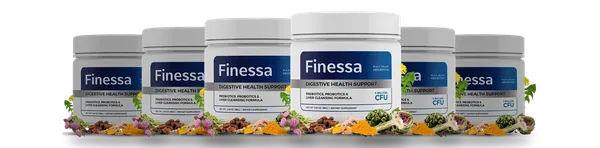
Order Finessa on the official website
One scoop a day, and 180 days to change your mind.
$39 to $59 a tub · 180 days to change your mind
Order Finessa On The Official WebsiteThree e-books with an order · 180-day money-back guarantee · lot FIN-26/GE-7289