Finessa Official Website › Blog › A scoop is not a capsule
A Scoop Is Not A Capsule: What A Powder Dose Actually Means
A capsule is filled by weight and closed. A scoop is a small cup, and what that cup holds depends on how the powder is sitting when you dip it. That difference decides how you take this tub, how you check it, and what the labelling rule for a supplement panel can and cannot tell you.
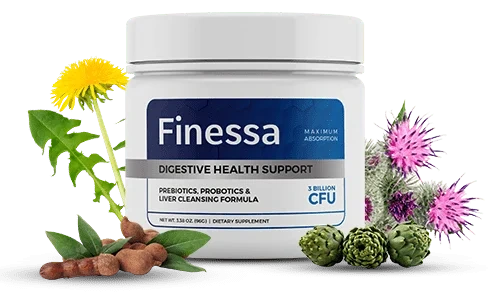
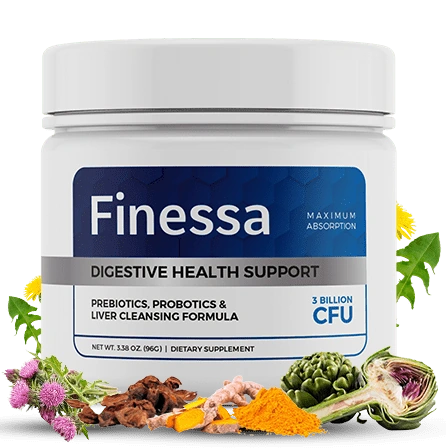
- The tub is a weight, not a count. 3.38 oz (96 g) of loose powder with a small scoop in it, one scoop a morning.
- Thirty scoops is the figure to act on. The panel prints fifty servings a container. Ninety-six grams over fifty is 1.92 g a scoop, which is lighter than the 3 g of carbohydrate the same panel declares.
- Levelling is the whole technique. A heaped scoop and a levelled scoop are different servings, and the difference is yours to control.
- The declared blends come to 2,259.5 mg. About 2.26 g of a 3.2 g scoop, which leaves roughly a gram for the flavouring, the sweetener and the flow agent.
What is actually in the tub
The container is 3.38 oz (96 g) of loose powder with a small plastic scoop sitting in it. One scoop a day, stirred into water or another drink, in the morning. What is unusual, if you have spent years counting capsules, is that the number on the front of the tub is a weight.
A capsule bottle gives you two figures that agree with each other: sixty capsules, one a day, sixty days. This tub gives you a net weight, a serving described as one scoop, and a supply stated separately by the seller. The seller sells each tub as a thirty-day supply. The Supplement Facts panel prints Servings Per Container: 50. Both cannot be true of the same 96 g.
Everything else on that panel is a blend total. Four of them, each marked with a Daily Value that is not established, and no milligram beside any individual plant. That is lawful under 21 CFR 101.36, the rule that governs how a supplement panel is written, and it is the reason a scoop cannot be converted into a per-ingredient figure. The ingredients page takes the names one at a time.
Why a scoop is a volume and a capsule is a weight
A capsule is filled on a machine to a target weight and closed. Whatever it holds, it holds every time, inside the tolerance the manufacturer works to. A scoop measures space instead, and what the space weighs depends on how tightly the powder is packed at the moment you dip it — which changes across the life of a tub.
Levelling is the whole technique
A heaped scoop and a levelled scoop are not the same serving. Draw the scoop through the powder, then level the top against the rim of the tub or the back of a clean knife. Do it the same way every morning and the variation between days falls to something you can ignore. Do it differently each morning and you have introduced a variable before the powder has had a chance to do anything at all. The how-to-take-it page sets out the rest of the routine.
A travelled tub is denser at the bottom
Powder settles in transit, so a scoop from a fresh tub and a scoop from a half-empty one are not quite the same mass. The manufacturing rule for dietary supplements asks a maker to meet its own specifications for identity, purity, strength and composition. That is a rule about the batch, not a promise about the scoopful, and the second part is yours.
Ninety-six grams, and the two servings figures
The whole disagreement resolves with one division, and every figure in it comes off the tub or the panel.
| The division | What one scoop weighs | Whether it fits the rest of the panel |
|---|---|---|
| 96 g over the 50 servings the panel prints | 1.92 g | It does not. The same panel declares 3 g of total carbohydrate in one scoop, and a serving cannot weigh less than something declared inside it. |
| 96 g over the 30 days the seller sells | 3.2 g | It fits. There is room for the declared blends and for the flavouring, sweetener and flow agent listed beneath them. |
| The four blends plus the Akkermansia line | 2,259.5 mg, about 2.26 g | 1,000 plus 755 plus 450 plus 52.5 plus 2, which is arithmetic on the panel’s own totals rather than an estimate. |
| What is left inside a 3.2 g scoop | about 0.94 g | Resistant dextrin, natural flavors, citric acid, sea salt, stevia extract and silicon dioxide, in the order the label prints them. |
Every figure in this table is either printed on the tub, printed on the Supplement Facts panel, or division done on those two.
Thirty is the figure to act on — it is the one the pricing page costs a day of powder against. It also sets the ceiling on the fibre in a scoop: the panel declares 3 g of total carbohydrate, so even if every gram of that were prebiotic fibre, 3 g is the most there can be. MedlinePlus puts the practical consequence plainly, which is that adding fibre too quickly brings gas, bloating and cramps. One scoop is one scoop for a reason.
What 2,259.5 mg leaves for everything else
At 3.2 g a scoop, the four blends and the separate Akkermansia line account for about 2.26 g. The remaining gram or so is the six items under other ingredients, and each is doing a job:
- Resistant dextrin is a soluble fibre and the bulk of what makes a scoop a scoop rather than a pinch.
- Natural flavors carry the taste. A powder has to be drinkable or the routine ends in week two.
- Citric acid is the tartness, and it is a common acidulant in a fruit-flavoured powder.
- Sea salt is the reason the panel declares 40 mg of sodium and 10 mg of potassium.
- Stevia extract (leaf) is the sweetener, which is why the panel declares ten calories rather than the figure a sugar-sweetened powder would carry.
- Silicon dioxide is the flow agent. It keeps the powder loose enough to scoop — and it is the reason the lid matters.
None of those six carries a weight either, and the same labelling rule does not require one: the other-ingredients line is a list in descending order, not a table of amounts. The panel page transcribes the whole thing, including the lines this article has not needed.
Thirty scoops a tub, and a 180-day window
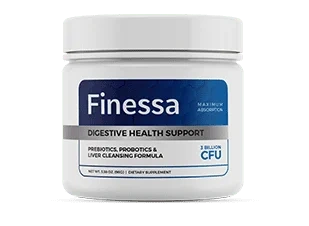
One scoop a morning, mixed into a drink. The three-tub pack is ninety scoops, which is long enough to find out whether the routine holds.
$39 to $59 a tub · 180 days to change your mind
Order Finessa On The Official WebsiteSix habits that make a scoop repeatable
Together these remove almost all of the variation a volume dose introduces.
- Level every scoop the same way. Against the rim, every morning, before the powder goes anywhere near the glass.
- Take it at the same time. The tub says morning. Same time, same glass, same order of operations.
- Use enough liquid. A short pour leaves powder on the sides and in the bottom, and what stays in the glass is not a dose.
- Stir until it is gone. Powder that has settled will settle again, so finish the glass rather than leaving the last mouthful.
- Keep the lid closed and the scoop dry. Silicon dioxide fights moisture; it does not beat a tub left open on a kitchen counter.
- Do not double a scoop to catch up. Adding dietary fibre too quickly brings gas, bloating and cramps, and a missed morning is not worth a bad afternoon. The routine page says the same.
A scoop against a capsule, side by side
The honest comparison is not which format is better, but which questions each one answers for you and which it hands back.
| What a buyer wants to know | A capsule answers it like this | A scoop answers it like this |
|---|---|---|
| How much am I taking? | A fill weight set by machine, the same in every shell. | A volume you set yourself. Level it the same way each morning and it repeats. |
| How do I check what is left? | Count the capsules in the bottle. | Weigh the tub, or count the mornings. Both work, neither is automatic. |
| Does it need anything else? | Water enough to swallow it. | A drink to mix into and a few seconds of stirring. Powder left sitting settles. |
| Does taste come into it? | No. A shell is tasteless by design. | Yes. Taste is the most common reason a powder routine quietly stops. |
| What does the label say about amounts? | Whatever its own panel prints. | Four blend totals, and no milligram beside any single plant name. |
Neither column is better. They are different instruments, and the second one asks more of the person holding it.
The last row has a whole article of its own. A blend total is a lawful way to write a label under the panel rule, and it means the most you can honestly say about a single name inside a blend is that it cannot exceed the total.
What a scoop cannot tell you
Three things, and it is better to know them before the first morning than after the fourth week.
- How much of any one plant you took. Nineteen named ingredients sit inside three botanical blends, and the panel prints a total for each blend rather than a figure for each name.
- Whether it is a meaningful source of a nutrient. One scoop declares 1 mcg of selenium. The adult recommended intake is 55 mcg a day — so this is not a selenium supplement, and it does not present itself as one.
- How many live cultures are in the glass. The panel counts them at the time of manufacture, which is a different moment from the morning you open the tub. That is its own article too.
How to check your own tub in five minutes
A kitchen scale that reads in grams is enough, and the check is worth doing once rather than never.
- Weigh the sealed tub before the first scoop and write the figure down.
- Take your scoop every morning for a week, levelling it the same way.
- Weigh the tub again on day eight. The difference divided by seven is what a scoop actually weighs in your hands.
- Multiply that by thirty. If it lands near 96 g, the thirty-day supply is real for the way you scoop.
The batch page applies the same instinct to the lot code. Part 111 governs how the batch was made; your scale governs what leaves the tub.
What this desk will not claim for a powder
The front of the tub prints Maximum Absorption. That is the seller’s wording and it stays in quotation marks, because the panel gives nothing to check it against — no comparison study, no bioavailability figure, and no per-ingredient amount that a figure could attach to.
Nor will this desk convert a scoop into a milligram of beet root, of cassia cinnamon or of anything else. FDA’s own page on structure and function claims draws the line a supplement label has to stay inside, and its worked example is that fibre maintains bowel regularity. The benefits page stays inside the same line.
Sources cited in this article
- U.S. Code of Federal Regulations, 21 CFR 101.36. Nutrition labeling of dietary supplements. https://www.ecfr.gov/current/title-21/chapter-I/subchapter-B/part-101/subpart-C/section-101.36
- U.S. Code of Federal Regulations, 21 CFR part 111. Current Good Manufacturing Practice in Manufacturing, Packaging, Labeling, or Holding Operations for Dietary Supplements. https://www.ecfr.gov/current/title-21/chapter-I/subchapter-B/part-111
- MedlinePlus, U.S. National Library of Medicine. Dietary Fiber. https://medlineplus.gov/dietaryfiber.html
- NIH Office of Dietary Supplements. Selenium: Fact Sheet for Consumers. https://ods.od.nih.gov/factsheets/Selenium-Consumer/
- U.S. Food and Drug Administration. Structure/Function Claims. https://www.fda.gov/food/nutrition-food-labeling-and-critical-foods/structurefunction-claims
Order Finessa on the official website
One scoop a day, thirty scoops a tub, and 180 days to change your mind.
$39 to $59 a tub · 180 days to change your mind
Order Finessa On The Official WebsiteThree e-books with an order · 180-day money-back guarantee · lot FIN-26/GE-7289