Finessa Official Website › Reading A Blend Panel
How To Read A Proprietary Blend Panel
A proprietary blend is a group of ingredients printed under one heading with one total weight and no figure for any single name. The total is a ceiling: nothing inside can weigh more than it, and everything inside shares it. Ingredient order narrows the range further, because a blend has to be printed heaviest first.
What a proprietary blend is, on a label
A heading, one weight, and a list of names in a fixed order.
A proprietary blend is a group of dietary ingredients printed under one heading with a single total weight beside the heading and no weight beside any name inside it. The dietary supplement labelling rule permits it and sets the conditions: the heading is identified as a blend, the total is declared, every ingredient in it is named, and the names are listed in descending order of weight.
So a blend is not a secret list. Every name is there, in a fixed order, with a real number attached to the group. What is missing is the one thing a reader wants — how that number divides.
What a blend total tells you
Three things, and they are worth having. It gives the combined weight of everything in that group. It sets the absolute maximum any single name in the group could be. And added across the groups, it tells you how much of a serving is dietary ingredient at all.
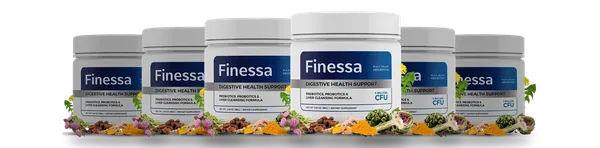
That last one is the most useful and the least used. Four blends on the tub this desk sells declare 2,259.5 mg (about 2.26 g) between them, against a scoop of about 3.2 g. Roughly seven tenths of the serving is declared ingredient and the rest is flavour, sweetener, acid, salt and flow agent — a ratio a buyer can reach in one subtraction and almost never does.
It says something about the shape of a formula too. Nine names sharing 1,000 mg is a different build from five sharing 755 mg, whatever the split turns out to be.
The most this could be, and the least
A ceiling and a floor. Everything else is a guess wearing a number.
Two numbers can be derived honestly from a blend total and there are no others. The ceiling is the whole blend: no name inside can weigh more than the group does. The floor is nothing at all — the rule sets an order rather than a minimum.
That is why every comparison on a blended label has to be written as a ceiling. Saying an ingredient is present at a certain amount is an invention. Saying it cannot exceed a certain amount is arithmetic on a printed number, and it is the strongest true statement available.
| Ingredient | What the published work used | The most this blend could hold | Share of the research amount |
|---|---|---|---|
| Cassia cinnamon | a mean of 2,000 mg a day across ten trials of 577 people | 755 mg, shared with four other names | At most 38% |
| Ginger | 1,200 mg as a single dose in eleven patients with functional dyspepsia | 755 mg, shared with four other names | At most 63% |
| Fructooligosaccharides | 12,000 mg a day for four weeks in 44 adults with constipation | 755 mg, shared with four other names | At most 6.3% |
Every figure in the third column is the whole blend. Each named item shares it with four others, so the real share is smaller.
The last column is doing something specific. It says that even in the impossible case where one name is the entire blend and the other four weigh nothing, the amount would still be a fraction of what the published work used. When the ceiling already falls short, the split has stopped mattering.
How the order of the names narrows the range
The names inside a blend are printed in descending order of weight. That is a requirement rather than a convention — and it is the most under-used line on a supplement label.
It means the first name weighs at least as much as every name after it. It means the last name in a group of nine can be no more than a ninth of the group, because the eight above it each weigh at least as much again. And it means a name you hoped to find near the top is telling you something when it appears near the bottom.
What it does not give you is the split. Descending order fits a formula where one name takes almost the whole weight and one where all of them are close to equal. Read the order as a ranking, not a ratio.
What a label prints when it has a split to print
| What it prints | What it buys the reader | On this panel |
|---|---|---|
| A milligram beside each name | A direct comparison with any published amount. | Absent. Four blend headings carry the weight instead. |
| A standardised percentage | A specification for how concentrated an extract is. | Present, on artichoke at 5% cynarin and silymarin at 80% as silibinin. |
| An extract ratio | How much starting material went into the extract. | Present, on cascara sagrada at 10:1. |
| A strain code on a live culture | The name of the organism actually studied, not just its genus. | Present, with named strains and their percentages of the blend. |
| A basis for a CFU count | Whether the count describes the day it was made or the day it expires. | Present as a basis: measured at the time of manufacture. |
Four of the five, which is better than the aisle average and still leaves the first one open.
The pattern of which ones a label manages is informative. A formula that standardises its extracts and codes its strains is being precise about everything except the figure that would let you compare it with a trial.
What a Daily Value not established actually means
It means no reference intake has been set for that ingredient, so there is no percentage to print. It does not mean the ingredient is unstudied — and it certainly does not mean any amount of it is fine.
The contrast is usually on the same panel. Selenium here is declared at 1 mcg and printed as 2% of the Daily Value, because a reference intake exists: the adult allowance is 55 mcg a day. The botanical blends beside it carry no established Daily Value, because no such figure exists for beet root or dandelion.
The other-ingredients line, and why it matters more in a powder
Under the panel sits a line of ingredients that are not dietary ingredients: flavours, acids, sweeteners, anti-caking and flow agents. No amounts are given there and none are required.
In a capsule that line is short and light. In a powder it can be most of the serving, because the powder has to taste of something and pour freely.
It can also hold something that belongs in the formula. Resistant dextrin sits in that line here, and it is a fibre of the same family as the fructooligosaccharides inside the Gut Health blend.
One number bounds all of it. Total carbohydrate is declared per serving, and every fibre in the tub sits inside that figure whether it is in a blend or in the line below. On this label it is 3 g, which caps the fructan content of a scoop at a quarter of the amount the constipation trial used. MedlinePlus is also plain that increasing fibre too quickly leads to gas, bloating and cramps.
Why a manufacturer uses a blend at all
Two reasons are given and both are real. A published split is a recipe a competitor can copy in an afternoon, and a blend total lets a formulator shift between suppliers as harvests and prices move without reprinting the label.
Neither is sinister and the practice is lawful. That is worth saying plainly, because the alternative reading of a blend heading is that something is being hidden.
The cost falls on the reader. A buyer who wants to know whether an ingredient is present at the amount a trial used cannot find out.
Five questions to put to any blend panel
- How many names share the heading? Five and nine are different propositions at the same weight, and the count is the first thing to read.
- Where is the name you care about in the order? Near the top it has weight behind it. Near the bottom it is capped by everything above it.
- Does the ceiling already fall short? Set the whole blend against the published amount. If the total is a fraction of it, the split has stopped being the question.
- What is declared outside the blends? Nutrients with a Daily Value, and the other-ingredients line, are where the rest of the serving is.
- What does the label print precisely? Standardised percentages, extract ratios, strain codes and a CFU basis all show a formulator that can be exact when it chooses to be.
The panel on this desk’s own tub, read this way
Four headings: a 1,000 mg polyphenol group of nine fruit and root powders, a 755 mg gut group of five, a 450 mg liver group of five, and a 52.5 mg probiotic group, with a 2 mg line beside them for a single named organism. Nineteen plant names, 2,259.5 mg (about 2.26 g) declared.
The ceilings on the three botanical groups already sit under the published amounts for the ingredients most people are buying them for, and the order says beet root leads the polyphenol group and cassia cinnamon leads the gut group. The precision is real — and it stops one column short.
The panel page prints it line by line, and the dosage section carries the whole ceiling table. The companion guide, powder or capsule, takes the other half of the question.
Who writes these guides?
This desk publishes what the tub says and marks where the seller says more than the tub does. The four claims below are the ones a sceptical reader can audit in ten minutes, which is the only reason to make them:
- The tub is the source. The claim lines, the net weight, the serving and every blend total come from the printed label and the Supplement Facts panel. Prices come from the seller’s order page, read on 18 September 2026, not from a review column.
- Blend totals, never invented amounts. The panel gives one figure for each of four blends and no figure for any single botanical, so this website prints the blend totals and stops there, including in the structured data a search engine reads.
- Sources are real and linked in the sentence. Every study cited here was confirmed against its own record before it was written down, and every government page was opened and checked by its title rather than assumed.
- Corrections change the date. Write to [email protected] and the review date at the foot of the page moves forward.
We earn when you buy. Getfinessa is the USA Authorized Finessa Retailer named at the top of this page, and this website makes money on orders placed through it. That is exactly why the blend-total notes, the three-star reviews and the cascara sagrada section are here: they are where our interest and yours pull apart, and you should be able to watch us choose.
Order support on +1 (302) 200-3480 handles tracking, changes, cancellations and refunds. It is not a sales line, and this website never presents it as a way to place an order: orders go through the checkout only.
Sources cited in this guide
- U.S. Code of Federal Regulations, 21 CFR 101.36. Nutrition labeling of dietary supplements. https://www.ecfr.gov/current/title-21/chapter-I/subchapter-B/part-101/subpart-C/section-101.36
- Leach MJ, Kumar S. Cinnamon for diabetes mellitus. Cochrane Database Syst Rev. 2012;2012(9):CD007170. https://pubmed.ncbi.nlm.nih.gov/22972104/
- Hu ML, Rayner CK, Wu KL, et al. Effect of ginger on gastric motility and symptoms of functional dyspepsia. World J Gastroenterol. 2011;17(1):105-10. https://pubmed.ncbi.nlm.nih.gov/21218090/
- Micka A, Siepelmeyer A, Holz A, Theis S, Schön C. Effect of consumption of chicory inulin on bowel function in healthy subjects with constipation: a randomized, double-blind, placebo-controlled trial. Int J Food Sci Nutr. 2017;68(1):82-89. https://pubmed.ncbi.nlm.nih.gov/27492975/
- NIH Office of Dietary Supplements. Selenium: Fact Sheet for Consumers. https://ods.od.nih.gov/factsheets/Selenium-Consumer/
- MedlinePlus, U.S. National Library of Medicine. Dietary Fiber. https://medlineplus.gov/dietaryfiber.html
Order Finessa on the official website
One scoop a day, and 180 days to change your mind.
$39 to $59 a tub · 180 days to change your mind
Order Finessa On The Official WebsiteThree e-books with an order · 180-day money-back guarantee · lot FIN-26/GE-7289