Finessa Official Website › Blog › Is Finessa safe?
Is Finessa Safe? Side Effects And Who Should Ask First
Safe is a big word for a small powder. No page can promise it for you. What we can do is list who the label rules out, who should check first, and what people may notice in the first week, using only what the panel and the cited health sources say.
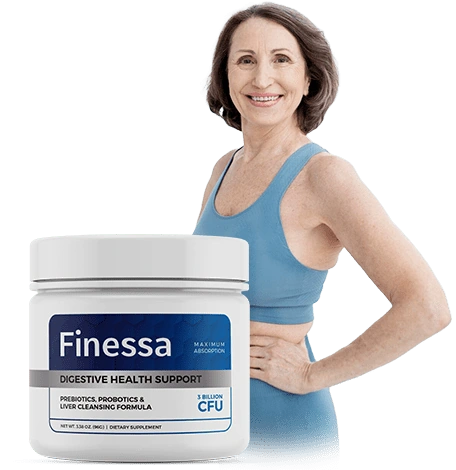
Finessa is sold for healthy adults aged 18 and over. It is not for anyone pregnant or nursing. It contains cascara sagrada, a stimulant laxative, and a fermentable fibre, so loose stools or bloating can happen early. Ask a pharmacist first if you take a diuretic, a heart-rhythm medicine or a prescribed laxative.
- Not for: anyone under 18, anyone pregnant, anyone nursing.
- Ask a pharmacist first: if you take a diuretic, a heart-rhythm medicine or a prescribed laxative.
- Early effects that fit the formula: looser or more frequent stools, wind and a full feeling in the first days.
- Other checks: an allergy to ragweed, chrysanthemum, marigold or daisy; a weak immune system; a history of calcium oxalate kidney stones; liver disease.
- Serving: one scoop a day. Never go above the amount on the tub unless a clinician says so.
Please read first. Finessa is a dietary supplement. It is not a drug, it is not FDA approved, and no supplement is. It is not meant to diagnose, treat, cure or prevent any disease. It is for healthy adults aged 18 and over, and not for anyone pregnant or nursing. Take medical questions to your doctor or pharmacist.
Who should not take Finessa at all?
The label is written for healthy adults aged 18 and over. It is not for anyone under 18. It is not for anyone who is pregnant or nursing. That is not a formality. Two plants on the panel give specific reasons, and little is known about ginger while breastfeeding.
It is also not a treatment. Constipation, irritable bowel and fatty liver are conditions, and a dietary supplement cannot be sold as a treatment for any of them. If you have symptoms that worry you, a doctor comes first, not a powder.
Who should ask a pharmacist or doctor before the first scoop?
The formula is a set of blends, so an interaction cannot be checked one ingredient at a time. Show the panel on your tub to a pharmacist. These are the specific points to raise.
| On the panel | Who should check first | Why |
|---|---|---|
| Cascara sagrada extract 10:1, in Gut Health | Anyone on a diuretic, a heart-rhythm medicine or a prescribed laxative | A stimulant laxative changes how the colon handles water and salts |
| Probiotic Blend and Akkermansia line | Anyone with a weak or suppressed immune system | The live cultures are the part of the formula that is alive |
| Milk thistle, in Liver Health | Anyone allergic to ragweed, chrysanthemum, marigold or daisy | NCCIH states a caution for the daisy family |
| Dandelion and artichoke | Same group as above | For dandelion the evidence is conflicting. Artichoke is in the same plant family, with no separate position published |
| Beet root, first in Polyphenol Blend | Anyone who has had a calcium oxalate kidney stone | Beetroot is listed as a high-oxalate food in one study. The oxalate in a scoop is not published |
| Cassia cinnamon, in Gut Health | Anyone with liver disease planning long unbroken use | Cassia carries coumarin, and the amount in a scoop is unknowable |
| Ginger, in Gut Health | Anyone on regular medicine | NCCIH's general line: tell your provider before using any herbal product |
Read the panel before you buy
A pharmacist can only help if you show them what is in the tub. The order page and the panel page both list it in full.
See today's price and guaranteeGetfinessa earns money on orders placed through this website. The checkout shows the live price before any payment details are asked for.
What might you notice in the first week?
Two parts of the formula can loosen or bloat, for different reasons. The fibre is fermented by colon bacteria, and MedlinePlus says that raising fibre too fast can lead to gas, bloating and cramps. Cascara sagrada does not wait for fermentation. It acts on the colon wall directly.
So the reports that fit this formula are looser or more frequent stools, wind and a full feeling in the first few days. That covers the searches for Finessa bloating, constipation and diarrhea. Note the direction, not a promise: the panel prints one total for the blend that holds both, so the strength of either cannot be read off the label.
- Drink a full glass of water with the scoop and more through the morning.
- Keep to one scoop. Doubling up is more than the tub states.
- If it does not settle within a week or two, stop and think again rather than push on.
- If you feel unwell, stop and speak to a doctor.
The guarantee runs 180 days from purchase. Nobody needs to finish a tub they are not getting on with.
Why is cascara sagrada the line to read twice?
In 2002 the FDA ruled that cascara sagrada is not generally recognised as safe and effective in over-the-counter drug products sold as laxatives. It asked for cancer-risk data and received none. That rule covers OTC laxative drugs. That rule does not reach dietary supplements, and Finessa is one. It is not a ban, and we do not describe it as one.
The NIH LiverTox record says cascara at recommended amounts for a limited period has few side effects, mostly mild. It reports liver injury at high doses taken for longer than recommended. How much cascara is in the 755 mg blend is not published. So use the tub as the label says, and do not treat it as a long, unbroken habit without asking a clinician.
What about cassia cinnamon and coumarin?
The panel names Cinnamomum cassia, which carries coumarin, where Ceylon carries almost none. The tolerable daily intake is about 7 mg for a 70 kg adult. Measured cassia bark varies from undetectable to roughly 10,000 mg per kg, even within one tree.
That spread means no amount of coumarin in a scoop is knowable, and we do not state one. As a rough bound: if the whole 755 mg blend were cassia bark at the highest level measured, the coumarin would be near that daily limit. Cinnamon is one of five names in the blend, so the real figure is lower. The sum limits the worry. It does not settle it. NCCIH says prolonged use of cassia could matter for sensitive people, including anyone with liver disease.
Is the licorice a worry?
The panel lists deglycyrrhizinated licorice. That is the form chosen to avoid the blood-pressure effect of whole licorice. NCCIH reports that glycyrrhizin can cause serious effects, such as an irregular heartbeat, in large amounts or over the long term. The deglycyrrhizinated form is the lower-risk one. Still, if you have high blood pressure or a heart or kidney condition, mention the panel to your doctor.
Frequently asked questions
Is Finessa safe?
It is sold for healthy adults aged 18 and over, and no page can promise safety for a given person. It contains a stimulant laxative and a fermentable fibre. Ask a pharmacist first if you take regular medicine.
Does Finessa cause bloating?
It can, early on. The formula holds a fermentable fibre, and raising fibre quickly can bring gas, bloating and cramps. Drink water with the scoop and keep to one scoop a day.
Can Finessa cause diarrhea or loose stools?
Looser or more frequent stools fit the formula, because the Gut Health blend contains cascara sagrada, a stimulant laxative. The amount is not published. If it does not settle in a week or two, stop and ask a clinician.
Can I take Finessa every day?
The label serving is one scoop a day. The stimulant laxative in the blend is not meant for long unbroken use, so ask a doctor or pharmacist if you plan to use it for many months.
Can I take Finessa with my medicine?
Show the panel to a pharmacist. Interactions cannot be checked one ingredient at a time, and some points need care, such as diuretics, heart-rhythm medicines and prescribed laxatives.
Can I take Finessa while pregnant or nursing?
No. The label is for healthy adults aged 18 and over and is not for anyone pregnant or nursing.
Our view
We would call Finessa a product that deserves a careful read, not a scare. For a healthy adult who follows the serving, the formula's early effects are the ordinary ones for a fibre and a laxative plant. The unknowns are real, though: no per-ingredient amounts, no trial of the finished powder, and a stimulant laxative sitting in a blend that sounds gentle.
The simplest safety step is also the cheapest. Take the tub, or a photo of the panel, to a pharmacist before the first scoop. They can check your medicines against the names far better than any web page.
If you are under 18, pregnant, nursing, on a diuretic or heart-rhythm medicine, or have a diagnosed condition, speak to a clinician first.
When you are ready, the checkout is open
One scoop a day for healthy adults. Check your medicines first, then see the live price and the guarantee.
See today's price and guaranteeGetfinessa earns money on orders placed through this website. The checkout shows the live price before any payment details are asked for.
Sources named on this website
- U.S. Food and Drug Administration. Status of Certain Additional Over-the-Counter Drug Category II and III Active Ingredients. Final rule. 67 FR 31125, 9 May 2002. https://www.federalregister.gov/documents/2002/05/09/02-11510/status-of-certain-additional-over-the-counter-drug-category-ii-and-iii-active-ingredients
- LiverTox: Clinical and Research Information on Drug-Induced Liver Injury. Cascara. National Institute of Diabetes and Digestive and Kidney Diseases, Bethesda MD. https://www.ncbi.nlm.nih.gov/books/NBK548113/
- National Center for Complementary and Integrative Health. Cinnamon: Usefulness and Safety. https://www.nccih.nih.gov/health/cinnamon
- Abraham K, Wohrlin F, Lindtner O, Heinemeyer G, Lampen A. Toxicology and risk assessment of coumarin: focus on human data. Mol Nutr Food Res. 2010;54(2):228-39. https://pubmed.ncbi.nlm.nih.gov/20024932/
- Woehrlin F, Fry H, Abraham K, Preiss-Weigert A. Quantification of flavoring constituents in cinnamon: high variation of coumarin in cassia bark from the German retail market and in authentic samples from Indonesia. J Agric Food Chem. 2010;58(19):10568-75. https://pubmed.ncbi.nlm.nih.gov/20853872/
- National Center for Complementary and Integrative Health. Milk Thistle: Usefulness and Safety. https://www.nccih.nih.gov/health/milk-thistle
- National Center for Complementary and Integrative Health. Dandelion: Usefulness and Safety. https://www.nccih.nih.gov/health/dandelion
- National Center for Complementary and Integrative Health. Licorice Root: Usefulness and Safety. https://www.nccih.nih.gov/health/licorice-root
- National Center for Complementary and Integrative Health. Ginger: Usefulness and Safety. https://www.nccih.nih.gov/health/ginger
- MedlinePlus, U.S. National Library of Medicine. Dietary Fiber. https://medlineplus.gov/dietaryfiber.html
- Finch AM, Kasidas GP, Rose GA. Urine composition in normal subjects after oral ingestion of oxalate-rich foods. Clin Sci (Lond). 1981;60(4):411-8. https://pubmed.ncbi.nlm.nih.gov/7249530/
- National Institute of Diabetes and Digestive and Kidney Diseases. Eating, Diet, & Nutrition for Kidney Stones. https://www.niddk.nih.gov/health-information/urologic-diseases/kidney-stones/eating-diet-nutrition
- National Center for Complementary and Integrative Health. Probiotics: Usefulness and Safety. https://www.nccih.nih.gov/health/probiotics-usefulness-and-safety